Near Lodheshwar Mahadev
Parijaat Tree
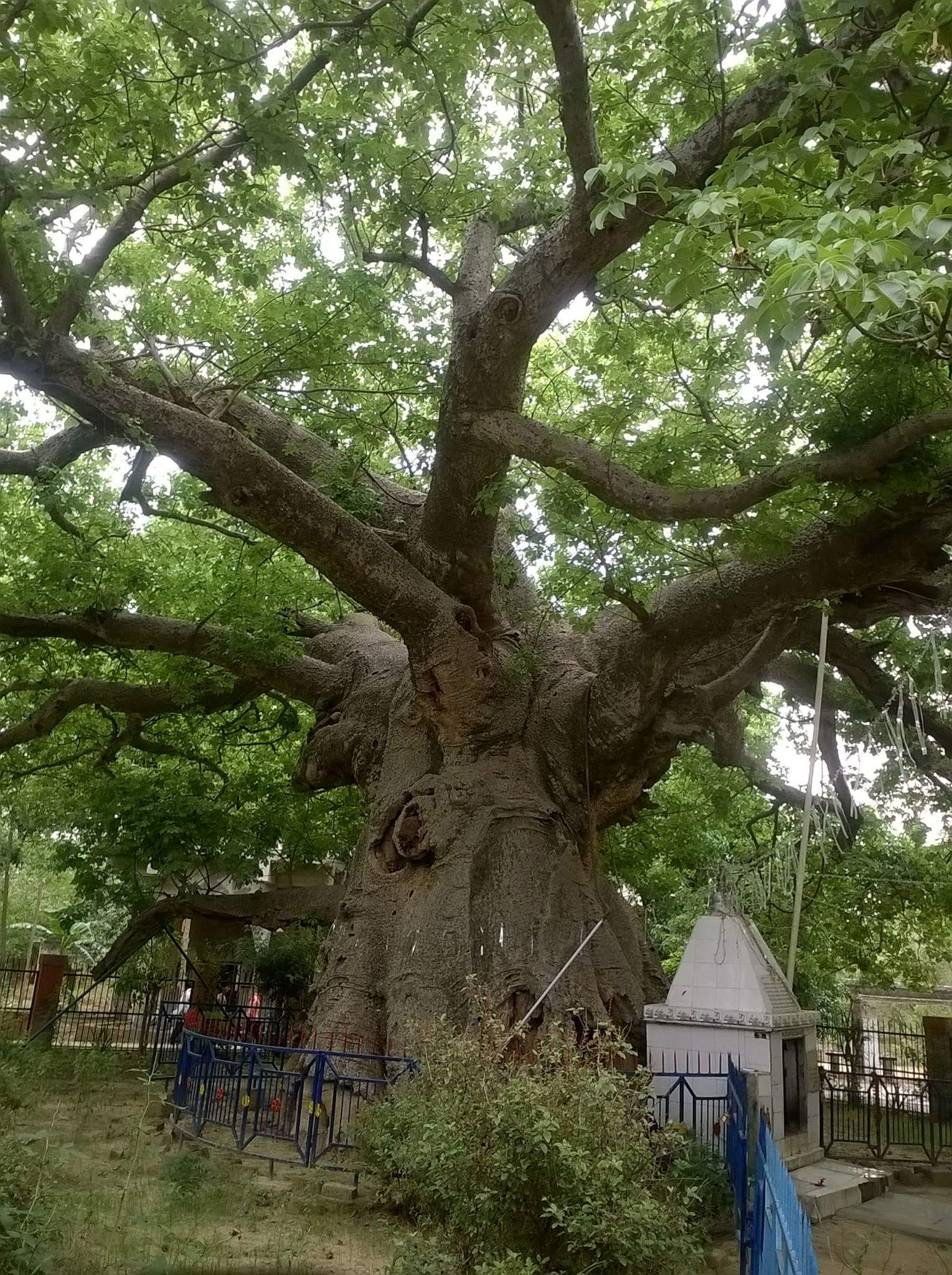
A sacred baobab of Kintoor — called the tree from paradise — standing among Mahabharata memory and living faith in Barabanki.
Kalpavriksha of the earth
The Parijaat tree grows in the Kintoor (Kintur) belt of Barabanki district, about 38 km east of the district headquarters and roughly an hour from Lucknow. Villagers and pilgrims know it as a wish-bearing Kalpavriksha — a tree of paradise brought into earthly story.
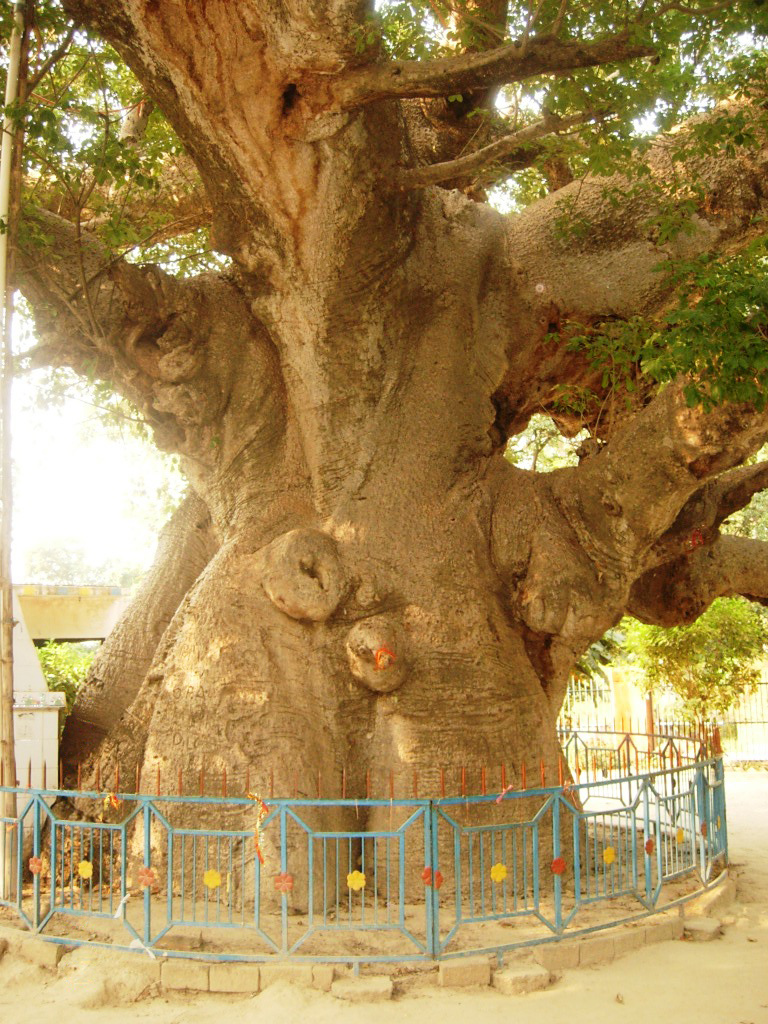
In modern science it is a baobab (Adansonia), rare in the fertile plains of India and protected by district order: any damage to the tree is forbidden. Visitors are asked not to touch it, so the living heritage remains unharmed.
District accounts describe a trunk girth of about 50 feet and a height of about 45 feet. Local lore says it does not bear seed or fruit that can grow another such tree. Radiocarbon study of its oldest dated wood points to roughly 775 calendar years — still ancient and unique in this landscape.
- Place
- Kintoor / Barolia area, Barabanki
- From Barabanki
- ~38 km east
- From Ramnagar
- ~11 km
- Kind
- Sacred baobab (Adansonia)
Stories the land remembers
Kintur is said to take its name from Kunti, mother of the Pandavas. One tradition holds that Arjuna brought the tree from the heavens so Kunti could offer its flowers to Lord Shiva. Another says Lord Krishna brought Parijaat for his queen Satyabhama (or Rukmini).
The Harivansh Purana speaks of Parijaat as a Kalpavriksha found otherwise only in heaven — whoever wishes beneath it, tradition says, finds the wish fulfilled. Newly-weds still seek blessings here, and every Tuesday a local fair gathers around the tree.
These are living beliefs of the region. Whether or not every tale can be dated, the tree’s presence has drawn pilgrims and protectors for generations.
How to reach & what to know
The easiest approach is via Ramnagar tehsil: about 11 km from Ramnagar town to Kintoor / the Parijaat site. From Lucknow, set navigation for Parijaat Tree, Village Kintur — typically a little over an hour by private vehicle.
Common visiting hours cited by local guides are about 6:00 am to 7:00 pm. Combine the stop with Kunteshwar Mahadev in Kintur and Lodheshwar Mahadev at Mahadeva for a full day of Barabanki darshan.
- Do not touch or climb the tree — it is protected.
- Local transport from Ramnagar (autos, jeeps) often runs roughly 6:00 am – 7:00 pm.
- Nearest practical railhead for the belt: Burhwal Junction, then road via Ramnagar.
- This sacred baobab is not the same plant as night-flowering jasmine (Nyctanthes), also popularly called Parijat.